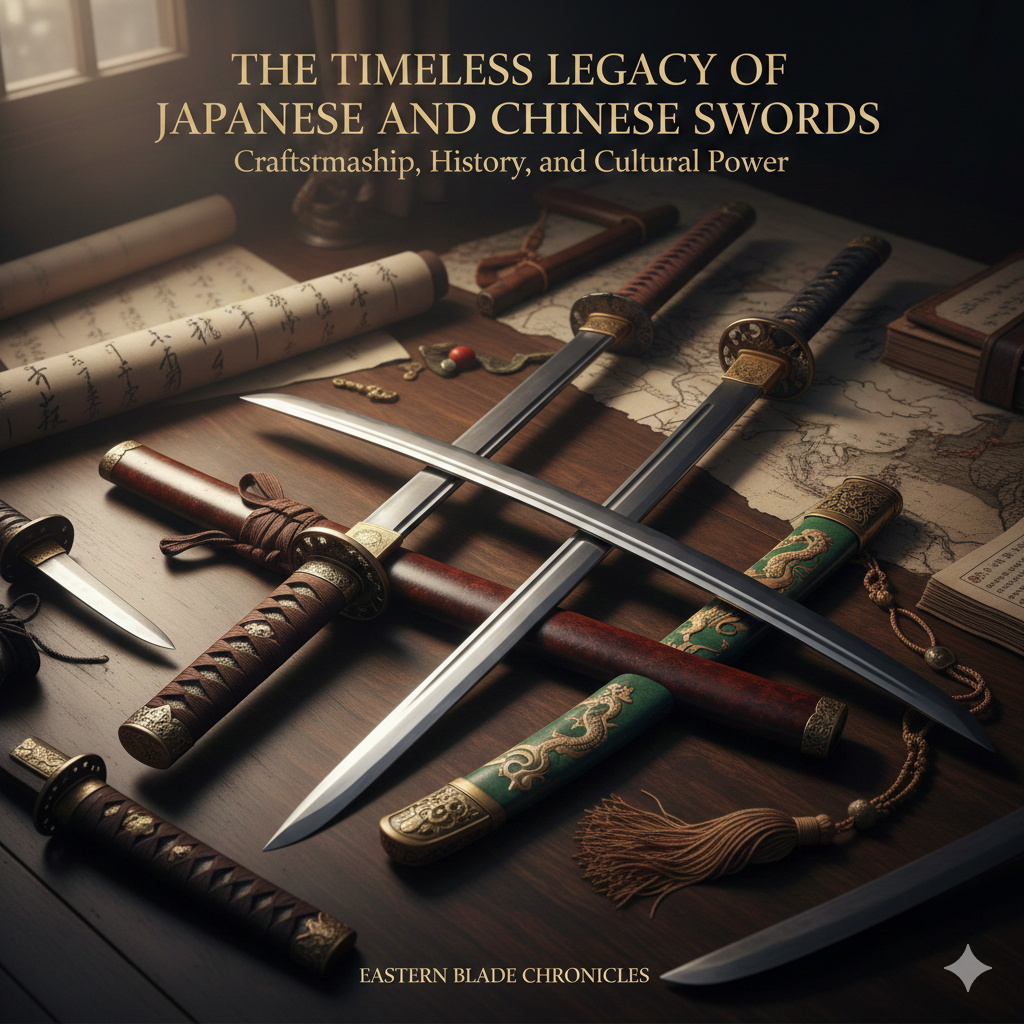
Swords have always represented more than weapons. Across Asia, they symbolized honor, discipline, artistry, and spiritual balance. Among the most respected bladed traditions in the world, Japanese and Chinese swords stand apart for their deep history, refined craftsmanship, and lasting influence on martial arts, cinema, and modern collectors. Even today, these blades continue to captivate historians, practitioners, and enthusiasts who value authenticity and tradition.
Understanding the difference between these legendary weapons requires exploring not only how they were forged, but why they were created and what they represented in their respective cultures.
The Philosophy Behind the Japanese Sword
The Japanese sword is inseparable from the samurai way of life. More than a tool for battle, it was considered the soul of the warrior. Forged with extreme precision and spiritual intent, each blade reflected the discipline, honor, and responsibility carried by its owner. Traditional swordsmiths followed strict rituals during the forging process, believing that a pure mindset produced a superior blade.
The iconic curved shape of Japanese swords, particularly the katana, was designed for fluid, precise cuts. The forging method involved folding steel multiple times to remove impurities and create a balance between hardness and flexibility. This allowed the blade to retain a razor-sharp edge while remaining resilient under stress.
Today, authentic Japanese swords are still admired for their elegant curvature, visible hamon (temper line), and perfect weight distribution. Collectors seeking historically accurate and high-quality blades often turn to trusted specialists like Japanese sword retailers that preserve traditional techniques while meeting modern expectations.
Key defining traits of Japanese swords include:
- Curved blade geometry optimized for cutting efficiency and speed
- Differential heat treatment creating a hard edge and flexible spine
These characteristics made Japanese swords exceptionally effective while also elevating them to works of art.
The Strategic Evolution of Chinese Swords
While Japanese swords emphasize discipline and precision, the Chinese sword tradition reflects adaptability and strategic versatility. China’s long and diverse history produced many sword styles, each designed for different combat philosophies and battlefield conditions. From straight double-edged jian to curved single-edged dao, Chinese swords evolved alongside military tactics and martial arts systems.
Chinese blades often focused on balance and agility, making them suitable for both thrusting and slashing techniques. The jian, frequently associated with scholars and martial artists, symbolized wisdom and moral strength. In contrast, the dao became widely used by soldiers due to its durability and effectiveness in large-scale combat.
Another defining aspect of Chinese swords is their connection to internal martial arts. Many forms emphasize flow, redirection of force, and harmony between body and blade. This philosophy influenced blade length, weight, and grip design, ensuring smooth transitions during combat.
For those exploring authentic reproductions and historical designs, dedicated collections such as Chinese sword selections offer insight into the diversity and craftsmanship of this tradition.
Craftsmanship: Similar Goals, Different Paths
Although Japanese and Chinese swords differ in form and philosophy, both traditions share an uncompromising respect for craftsmanship. Swordsmiths in both cultures treated blade-making as a sacred profession, passing techniques through generations. However, the approach to materials and construction varied.
Japanese smiths focused heavily on steel purity and heat control, often working with tamahagane steel. The result was a blade designed for decisive, clean strikes. Chinese smiths, on the other hand, experimented with layered steels and varied alloys, prioritizing adaptability and battlefield durability.
Despite these differences, both traditions aimed to create swords that balanced strength, flexibility, and beauty. This shared pursuit of excellence is why these blades remain influential centuries later.
Cultural Influence Beyond the Battlefield
Japanese and Chinese swords have shaped global culture far beyond their original purpose. Japanese swords are deeply embedded in modern media, from samurai films to anime and martial arts cinema. They represent discipline, loyalty, and the pursuit of perfection.
Chinese swords, meanwhile, are central to wuxia storytelling, traditional opera, and martial arts demonstrations. They symbolize harmony, intelligence, and moral balance. Both traditions continue to inspire modern sword collectors, martial artists, and historians seeking a tangible connection to the past.
Choosing Between Japanese and Chinese Swords Today
Modern collectors and practitioners often debate which sword tradition suits them best. The decision usually depends on personal philosophy rather than superiority. Japanese swords appeal to those who admire precision, ritual, and minimalist design. Chinese swords attract individuals who value versatility, fluid movement, and strategic expression.
When selecting a sword, consider:
- Your interest in martial arts practice versus historical display
- The cultural philosophy and combat style that resonates with you
Understanding these factors ensures that the sword you choose aligns with your purpose and appreciation for tradition.
Why Authenticity Matters
With the rising popularity of collectible swords, authenticity has become more important than ever. Poorly made replicas lack proper balance, structural integrity, and historical accuracy. Authentic reproductions honor original designs, materials, and forging techniques, ensuring both safety and long-term value.
Reputable sword specialists invest in craftsmanship, research, and quality control. This dedication preserves the legacy of these legendary weapons while making them accessible to modern enthusiasts.
Final Thoughts
Japanese and Chinese swords are not merely relics of the past; they are living symbols of cultural identity, craftsmanship, and philosophy. Each blade tells a story shaped by history, warfare, and artistic vision. Whether you are drawn to the disciplined elegance of Japanese swords or the strategic versatility of Chinese blades, both traditions offer timeless value.
By choosing authentic, well-crafted swords, collectors and practitioners keep these traditions alive, honoring the generations of artisans and warriors who forged their legacy in steel.