After a crash in Charlotte, the costs of recovery can spread well beyond vehicle repairs and medical bills. A parent may need extra childcare while attending appointments, and someone caring for an older adult or a family member with a disability may need temporary help at home. Keeping records of these expenses can make the auto accident settlement process easier to understand and help show how the collision affected the household financially.
Receipts, invoices, medical instructions, and payment confirmations create accountability by connecting each expense to a real need. Organizing accident paperwork early also reduces the chance that important details will be forgotten as weeks or months pass. A practical system gives an injured person a clearer view of current costs while preserving information that may matter during an insurance claim.
Building a Clear Record of the Crash and Its Costs
Accident documents often arrive at different times and from several sources. The police report may become available days after the collision, medical bills can arrive weeks later, and insurance correspondence may continue for months. Without a consistent filing method, related records can become separated, making it harder to explain when an expense arose and why it was necessary.
The effects can become more complicated when the injured person has family responsibilities. A doctor may restrict driving, lifting, or prolonged standing, which can prevent a parent from taking children to school or helping a dependent with daily activities. Those limitations may cause the family to pay for services it did not need before the crash. The connection between the injury and the added expense is usually clearer when medical guidance, dates of service, and proof of payment are kept together.
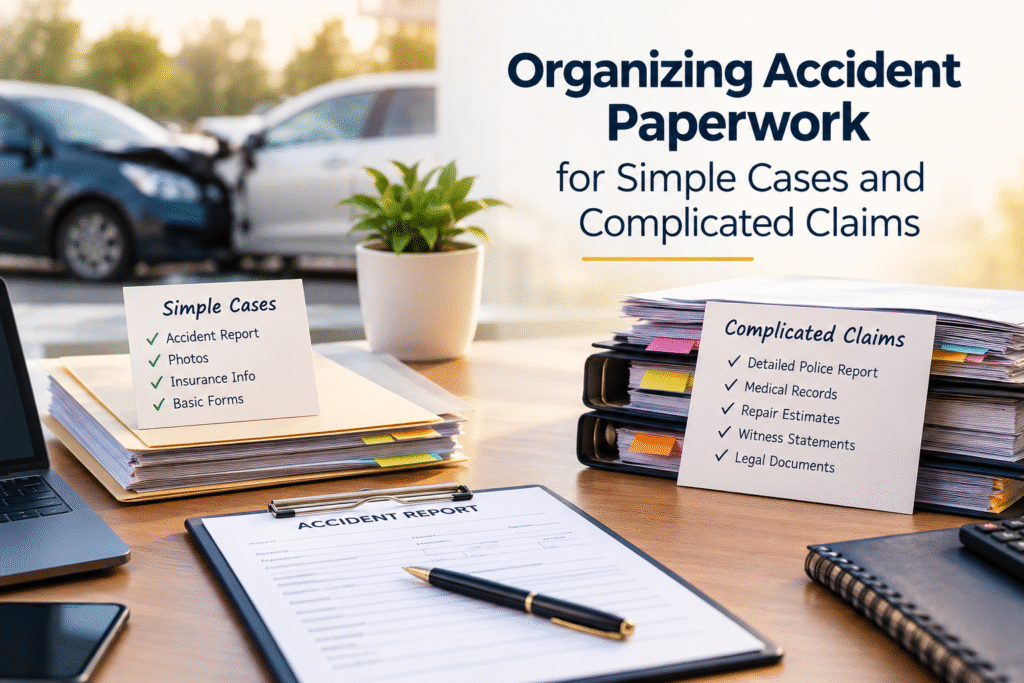
A useful accident file may include:
- The crash report, photographs, witness information, and insurance details Medical records, discharge instructions, prescriptions, and appointment schedules
- Repair estimates, towing bills, rental car charges, and transportation receipts
- Childcare or dependent care invoices showing dates, services, and amounts paid
- Pay records, work restrictions, insurance letters, and a written expense log
Paper records can be stored in labeled folders, while electronic documents can be placed in clearly named digital folders. A simple naming format such as the date, provider, and document type makes individual files easier to locate. Backing up digital copies also protects against lost paperwork, damaged phones, or deleted email attachments.
What Childcare and Dependent Care Records May Matter?
The most useful records generally show who provided the care, when it was provided, what service was performed, and how much it cost. An invoice from a daycare center or home care company may already contain this information. When a relative, neighbor, or independent caregiver is paid directly, a signed receipt or written payment confirmation can create a clearer record than a cash payment with no documentation.
The reason for the added care should also be recorded. For example, a parent with a shoulder injury may be unable to lift a toddler for several weeks. A medical note describing the lifting restriction, paired with childcare invoices from the same period, helps explain why the expense followed the crash. The goal is not to collect paperwork for its own sake. It is to preserve the cause-and-effect relationship between the injury, the resulting limitation, and the cost.
Families should separate ordinary care expenses from new or increased costs. If a child attended daycare three days a week before the accident but needed five days a week during the parent’s recovery, the additional two days may be the clearest change. Prior invoices can establish the normal schedule, while later invoices show how the household’s needs increased.
Dependent care can involve more than supervision. An injured caregiver may need help preparing meals, transporting a family member to appointments, assisting with mobility, or completing household tasks for someone who relies on regular support. Detailed descriptions of these services make the records more informative and reduce uncertainty about what was purchased.
How Can a Daily Log Support Financial Records?
A daily log provides context that receipts alone may not show. It can identify appointment dates, pain levels, transportation problems, work absences, and tasks the injured person could not complete. Entries should remain accurate and straightforward. Short notes made close to the event are generally more reliable than trying to reconstruct several months of activity from memory.
Imagine that a Charlotte parent is injured in a rear-end collision while returning home from work. Their doctor advises them not to drive for three weeks because of medication side effects and limited neck movement. During that period, the family pays a neighbor to take two children to school and hires a caregiver to help an older parent who lives in the home. A log identifying the medical restriction, care dates, payment amounts, and reason for each service helps connect the added costs to the recovery period.
The log should match other records whenever possible. If an entry mentions a medical appointment, the appointment confirmation or provider record can be kept with it. If the family paid for transportation or care that day, the receipt can be attached or saved under the same date. Consistency across documents can make the overall account easier for an insurer or legal professional to review.
A log can also identify unpaid assistance. A relative may take time away from work to help with transportation or dependent care. Whether that assistance affects a claim depends on the facts and applicable law, but recording the dates, hours, and tasks preserves information that could otherwise disappear. The record should describe what actually happened without estimating unsupported amounts or overstating the level of care.
What Responsibilities Come With an Insurance Claim?
An injured person generally has a responsibility to provide truthful, relevant information supporting the claimed losses. Insurers may ask for bills, proof of payment, medical documentation, or an explanation of how an expense relates to the collision. Responding carefully matters because incomplete records can delay the review, while inconsistent statements may create questions about otherwise reasonable costs.
Claimants should keep copies of everything sent to an insurer. Emails, upload confirmations, mailed letters, and notes from phone conversations can help establish when information was provided. A communication log can include the date, the representative’s name, the subject discussed, and any promised follow-up. This is especially helpful when several adjusters or insurance companies are involved.
People also have the right to understand what information is being requested and why. Broad medical authorizations, recorded statements, or requests for extensive personal records can have consequences beyond one expense. Before signing documents that are unclear, an injured person can ask questions or seek legal guidance about the scope of the request.
Careful documentation does not guarantee that every cost will be reimbursed. An insurer may dispute whether a service was necessary, whether the price was reasonable, or whether the crash caused the need. Prior records, medical restrictions, detailed invoices, and a consistent timeline provide a stronger factual basis for addressing those questions.
Why Do Complicated Claims Need More Detailed Files?
A relatively simple claim may involve one medical provider, a short recovery, and a small number of expenses. A complicated claim can involve several injuries, multiple insurers, extended treatment, missed work, ongoing care needs, or disagreement about fault. As the number of people and expenses grows, a basic envelope of receipts may no longer provide enough structure.
A chronological index can help manage a larger file. Each entry can identify the date, document, source, amount, and related category. Medical bills can be separated from household expenses, while a master expense sheet records the total. This approach makes it easier to identify missing invoices, duplicate charges, insurance adjustments, and bills that remain unpaid.
Future needs require particular care. If a medical provider expects restrictions to continue, the family may face additional childcare or dependent care expenses after settlement discussions begin. Current invoices can show the existing cost, but medical opinions and care plans may be needed to explain how long the limitation is expected to last. Settling before the likely duration of those expenses is understood can leave a household responsible for later costs.
Keeping the Household Record Practical and Complete
The most effective filing system is one the household can maintain during recovery. A person dealing with pain, appointments, and family obligations may not have time for a complicated process. One folder for incoming documents, a weekly expense review, and a backed-up digital copy can be enough to keep the record current. The system should make life easier, not add another source of stress.
Residential routines can change quickly after a collision. In a Charlotte neighborhood, a parent who once handled school transportation, grocery trips, and care for an older relative may suddenly depend on paid help or assistance from friends. Recording those changes while they are happening provides a more accurate picture than relying on memory after normal routines return.
Common considerations include whether each expense has a receipt, whether the service dates match the recovery period, and whether medical restrictions explain the need for added care. It is also worth checking that insurance payments, outstanding balances, and personal payments are recorded separately. This prevents confusion about what has already been covered and what the household still owes.
When injuries, disputed fault, or long-term dependent care make the paperwork difficult to evaluate, Rosensteel Fleishman can review the available records and explain what additional documentation may be useful. A free consultation can also help a family understand how North Carolina claim rules may apply without requiring them to make immediate decisions.
A steady routine is the central takeaway. Save records as they arrive, note why unusual expenses were necessary, and keep copies of all insurance communications. Clear documentation cannot remove the disruption caused by a crash, but it can preserve the facts needed to explain its financial effect on the household.
After a crash in Charlotte, the costs of recovery can spread well beyond vehicle repairs and medical bills. A parent may need extra childcare while attending appointments, and someone caring for an older adult or a family member with a disability may need temporary help at home. Speaking with a Charlotte auto accident attorney can help a family understand how to document these financial changes.
Receipts, invoices, medical instructions, and payment confirmations create accountability by connecting each expense to a real need. Organizing accident paperwork early also reduces the chance that important details will be forgotten as weeks or months pass. A practical system gives an injured person a clearer view of current costs while preserving information that may matter during an insurance claim.
Building a Clear Record of the Crash and Its Costs
Accident documents often arrive at different times and from several sources. The police report may become available days after the collision, medical bills can arrive weeks later, and insurance correspondence may continue for months. Without a consistent filing method, related records can become separated, making it harder to explain when an expense arose and why it was necessary.
The effects can become more complicated when the injured person has family responsibilities. A doctor may restrict driving, lifting, or prolonged standing, which can prevent a parent from taking children to school or helping a dependent with daily activities. Those limitations may cause the family to pay for services it did not need before the crash. The connection between the injury and the added expense is usually clearer when medical guidance, dates of service, and proof of payment are kept together.
A useful accident file may include:
- The crash report, photographs, witness information, and insurance details
- Medical records, discharge instructions, prescriptions, and appointment schedules
- Repair estimates, towing bills, rental car charges, and transportation receipts
- Childcare or dependent care invoices showing dates, services, and amounts paid
- Pay records, work restrictions, insurance letters, and a written expense log
Paper records can be stored in labeled folders, while electronic documents can be placed in clearly named digital folders. A simple naming format such as the date, provider, and document type makes individual files easier to locate. Backing up digital copies also protects against lost paperwork, damaged phones, or deleted email attachments.
What Childcare and Dependent Care Records May Matter?
The most useful records generally show who provided the care, when it was provided, what service was performed, and how much it cost. An invoice from a daycare center or home care company may already contain this information. When a relative, neighbor, or independent caregiver is paid directly, a signed receipt or written payment confirmation can create a clearer record than a cash payment with no documentation.
The reason for the added care should also be recorded. For example, a parent with a shoulder injury may be unable to lift a toddler for several weeks. A medical note describing the lifting restriction, paired with childcare invoices from the same period, helps explain why the expense followed the crash. The goal is not to collect paperwork for its own sake. It is to preserve the cause-and-effect relationship between the injury, the resulting limitation, and the cost.
Families should separate ordinary care expenses from new or increased costs. If a child attended daycare three days a week before the accident but needed five days a week during the parent’s recovery, the additional two days may be the clearest change. Prior invoices can establish the normal schedule, while later invoices show how the household’s needs increased.
Dependent care can involve more than supervision. An injured caregiver may need help preparing meals, transporting a family member to appointments, assisting with mobility, or completing household tasks for someone who relies on regular support. Detailed descriptions of these services make the records more informative and reduce uncertainty about what was purchased.
How Can a Daily Log Support Financial Records?
A daily log provides context that receipts alone may not show. It can identify appointment dates, pain levels, transportation problems, work absences, and tasks the injured person could not complete. Entries should remain accurate and straightforward. Short notes made close to the event are generally more reliable than trying to reconstruct several months of activity from memory.
Imagine that a Charlotte parent is injured in a rear-end collision while returning home from work. Their doctor advises them not to drive for three weeks because of medication side effects and limited neck movement. During that period, the family pays a neighbor to take two children to school and hires a caregiver to help an older parent who lives in the home. A log identifying the medical restriction, care dates, payment amounts, and reason for each service helps connect the added costs to the recovery period.
The log should match other records whenever possible. If an entry mentions a medical appointment, the appointment confirmation or provider record can be kept with it. If the family paid for transportation or care that day, the receipt can be attached or saved under the same date. Consistency across documents can make the overall account easier for an insurer or legal professional to review.
A log can also identify unpaid assistance. A relative may take time away from work to help with transportation or dependent care. Whether that assistance affects a claim depends on the facts and applicable law, but recording the dates, hours, and tasks preserves information that could otherwise disappear. The record should describe what actually happened without estimating unsupported amounts or overstating the level of care.
What Responsibilities Come With an Insurance Claim?
An injured person generally has a responsibility to provide truthful, relevant information supporting the claimed losses. Insurers may ask for bills, proof of payment, medical documentation, or an explanation of how an expense relates to the collision. Responding carefully matters because incomplete records can delay the review, while inconsistent statements may create questions about otherwise reasonable costs.
Claimants should keep copies of everything sent to an insurer. Emails, upload confirmations, mailed letters, and notes from phone conversations can help establish when information was provided. A communication log can include the date, the representative’s name, the subject discussed, and any promised follow-up. This is especially helpful when several adjusters or insurance companies are involved.
People also have the right to understand what information is being requested and why. Broad medical authorizations, recorded statements, or requests for extensive personal records can have consequences beyond one expense. Before signing documents that are unclear, an injured person may want to consult a <a href=”https://www.rflaw.net/practice-areas/charlotte-car-accident-lawyer/”>car crash law firm in Charlotte</a> about the scope of the request and how it could affect the claim.
Careful documentation does not guarantee that every cost will be reimbursed. An insurer may dispute whether a service was necessary, whether the price was reasonable, or whether the crash caused the need. Prior records, medical restrictions, detailed invoices, and a consistent timeline provide a stronger factual basis for addressing those questions.
Why Do Complicated Claims Need More Detailed Files?
A relatively simple claim may involve one medical provider, a short recovery, and a small number of expenses. A complicated claim can involve several injuries, multiple insurers, extended treatment, missed work, ongoing care needs, or disagreement about fault. As the number of people and expenses grows, a basic envelope of receipts may no longer provide enough structure.
A chronological index can help manage a larger file. Each entry can identify the date, document, source, amount, and related category. Medical bills can be separated from household expenses, while a master expense sheet records the total. This approach makes it easier to identify missing invoices, duplicate charges, insurance adjustments, and bills that remain unpaid.
Future needs require particular care. If a medical provider expects restrictions to continue, the family may face additional childcare or dependent care expenses after settlement discussions begin. Current invoices can show the existing cost, but medical opinions and care plans may be needed to explain how long the limitation is expected to last. Settling before the likely duration of those expenses is understood can leave a household responsible for later costs.
Keeping the Household Record Practical and Complete
The most effective filing system is one the household can maintain during recovery. A person dealing with pain, appointments, and family obligations may not have time for a complicated process. One folder for incoming documents, a weekly expense review, and a backed-up digital copy can be enough to keep the record current. The system should make life easier, not add another source of stress.
Residential routines can change quickly after a collision. In a Charlotte neighborhood, a parent who once handled school transportation, grocery trips, and care for an older relative may suddenly depend on paid help or assistance from friends. Recording those changes while they are happening provides a more accurate picture than relying on memory after normal routines return.
Common considerations include whether each expense has a receipt, whether the service dates match the recovery period, and whether medical restrictions explain the need for added care. It is also worth checking that insurance payments, outstanding balances, and personal payments are recorded separately. This prevents confusion about what has already been covered and what the household still owes.
When injuries, disputed fault, or long-term dependent care make the paperwork difficult to evaluate, Rosensteel Fleishman can review the available records and explain what additional documentation may be useful. A free consultation can also help a family understand how North Carolina claim rules may apply without requiring them to make immediate decisions.
A steady routine is the central takeaway. Save records as they arrive, note why unusual expenses were necessary, and keep copies of all insurance communications. Clear documentation cannot remove the disruption caused by a crash, but it can preserve the facts needed to explain its financial effect on the household.