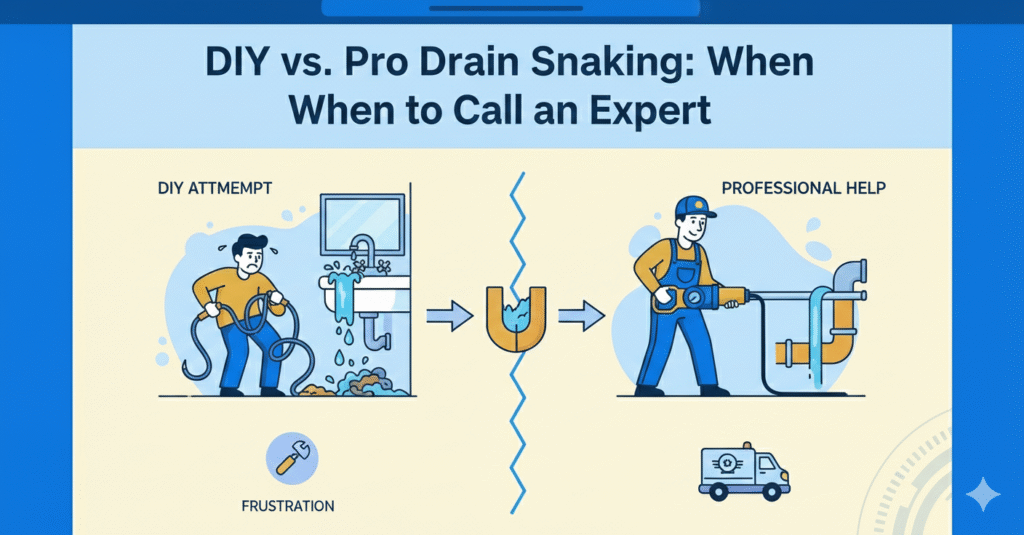
One of them, a slow drain, is irritating but livable. As the main point of entry when dealing with serious blockages, the pipe for your home’s plumbing is connected to a Drain Cleanout, essentially a capped pipe somewhere on your property or inside your home, such as in the basement. When the water stops flowing and the backups start, homeowners confront a tough financial and safety decision: rent a machine and go after the mess themselves, or call in a professional plumber?
This guide will compare the expenses, risks, and effectiveness of do-it-yourself methods vs. professional services to help you make the smartest choice for your home.
Understanding Your Plumbing Access Point
The cleanout pipe is the check-in point for your main sewer line. It provides instant access to blockages that plungers can not reach. Minor blockages tend to occur in the P-trap beneath a sink; your big stoppages are typically further down the line from roots, foreign objects, or just Fats, Oils, and Greases.
DIY Snaking: When to Handle It Yourself
Not all clogs require a call to the service department. If you’re handy around the house and have appropriate safety equipment (more on that below), there are plenty of small repairs you can make yourself.
You can likely DIY if:
- The clog is focused: Only a single sink or shower is slow to drain.
- Problem: It’s something near the drain opening, as deep blockages run through most of its length.
- You’ve got the right tools: A flange plunger (not a cup plunger), a hand-cranked drain snake (also known as an auger or plumber’s snake), or baking soda and vinegar can clear minor organic material.
The Pros:
- Affordable: Renting a machine or purchasing a hand auger is less expensive than calling in the pros.
- Convenience: You can deal with the issue immediately, instead of waiting on an appointment
The Risks of DIY Snaking
Do-it-yourself (DIY) is not without repercussions. Misusing a mechanical snake can scratch ceramic fixtures or perforate older pipes. Additionally, chemical drain cleaners can eat away at the pipes instead of clearing them, causing you to pay for costly repairs down the line.
The Complexity of Flow Control
To see why the do-it-yourself approach often comes up short when dealing with complex clogs, it’s helpful to have a mental model of plumbing as a network. In information technology, the Application Control Engine is a network device made by Cisco Systems for datacenter applications that require low latency, high throughput, and multiple protocols.
Your sewage line needs the same optimization. Unless being able to monitor and control the “flow” of a supply as well as isolate just how much pressure is in there, like they can with their professional diagnostic tools, it’s often a crap shoot to do this kind of thing yourself. You may punch a hole through the clog (temporarily restoring flow) without eliminating its cause, and you’ll find yourself with another backup a few weeks later.
Professional Snaking: When to Call the Experts
There are situations, however, where DIY tools just don’t pack enough punch. You should pass on the rental equipment and make a special call for a pro if:
- Multiple drains or lines are backing up: This indicates a clog in the main sewer line.
- You hear gurgling: If the toilet makes a bubbling sound when you run the sink, there could be an airlock in the drain, or a deep blockage.
- Bad smells don’t go away: This indicates sewage is not flowing out of your home.
Professional vs. DIY: By The Numbers
To help you decide, we pitted the features of professional gear against typical DIY alternatives.
| Feature | DIY Method | Professional Service |
| Reach | Typically 25–50 feet | 100+ feet (Main Sewer Line) |
| Cleaning Pressure | N/A (Mechanical scrubbing only) | 1,500 – 4,000 PSI (Hydro-jetting) |
| Clog Identification | Guesswork | Video Camera Inspection |
| Effectiveness of Grease | Low (Pushes grease around) | High (Removes 99% of buildup) |
| Root Removal | Temporary (Punches a hole in the roots) | Permanent (Cuts and flushes roots) |
| Note: According to the EPA, approximately 60% of sewer clogs are FOG-related (Fats, Oils, Grease). Professional hydro-jetting is the only method that fully scours FOG from pipe walls. | ||
Benefits of Professional Drain Cleaning
Professionals don’t simply unclog drains; they clean them. Utilizing high-resolution video cameras, they determine the precise location and cause of the obstruction. For stubborn clogs, they turn to hydro-jetters, machines that blast water pressure into pipes to scrub the walls clean of grease and cut growling tree roots. This opens your pipes and restores them to like-new diameter, avoiding future clogs.
Preventative Maintenance
The best clog is the one that doesn’t happen. Regular maintenance by a professional can help to prolong the life of your plumbing system. Don’t use chemical cleaners either; use enzymatic cleaners that break down organic waste without eating away at the ceramic. (Also, think about high-tech water monitoring that can tell you in advance if a leak or any flow irregularities are happening before they result in disasters.
Conclusion
If you’ve got one slow drain, a do-it-yourself fix using a hand snake is cost-effective. But when you’re dealing with back-ups in more than one fixture or blocked drains that happen often, it’s safe and cost-effective to seek out a professional. Professionals can get in there and use sophisticated diagnostics, as well as high-powered cleaning methods, to make sure your “network” is running smoothly, protecting you from water damage and health risks.