Why a Good Payoff Plan Should Feel Almost Boring
When people talk about paying off debt, the conversation usually turns into a math contest. Which method saves the most interest? Which timeline is the fastest? Which calculator gives the cleanest result? That approach makes sense on paper, but real life is rarely lived on paper. Real life happens when your car needs work, your grocery bill jumps, or your motivation disappears on a random Tuesday.
That is why the best payoff plan is often not the one that looks smartest in a spreadsheet. It is the one you can keep doing when life gets noisy. For some people, that may mean focusing on one small balance first. For others, it may mean using a simple structure while also dealing with practical short term needs, whether that is cutting expenses, adjusting bill timing, or researching options like Austin car title loans to understand how different borrowing choices fit into a broader repayment picture. The key is not perfection. The key is consistency.
A payoff plan that survives your real routines is more powerful than an ideal plan you abandon after three weeks. That may sound less exciting than a dramatic financial reset, but it is usually how lasting progress happens.
Behavior Beats Brilliance
A lot of people assume financial success comes from making the single most efficient choice. In reality, sticking with a decent plan often beats starting and stopping a perfect one. If your strategy is so strict that one unexpected expense knocks you off course, it is not actually strong. It is fragile.
Think about how most habits work. People do not usually fail because they do not understand what they should do. They fail because the system asks too much of them, too often, with too little margin for normal human behavior. Research on habit formation often points to the importance of repetition and environmental cues over pure willpower. That is one reason so many experts encourage building routines that are easier to repeat instead of relying on motivation alone. You can see that idea reflected in the American Psychological Association’s discussion of habit science and behavior change through everyday habit formation research.
In debt payoff, the same principle applies. If your plan requires you to track every penny perfectly, give up every convenience, and stay emotionally steady for a year straight, the plan is asking for too much. A more realistic strategy might save slightly less in interest but lead to a much higher chance of follow through.
The Emotional Side of Debt Is Not a Side Issue
People often treat emotion like a distraction from good financial planning. It is not. Emotion is part of the system. Shame, stress, frustration, and fatigue all affect how people spend and how they repay debt. Ignoring that does not make it disappear. It just makes your plan less accurate.
That is why a small early win can matter so much. Paying off one balance, even if it is not the highest interest one, can create relief and momentum. It can simplify your monthly life. It can reduce the number of due dates you manage. It can give you proof that your effort is working. Those things matter.
The Consumer Financial Protection Bureau explains that common debt reduction strategies include both the highest interest rate approach and the snowball approach, and notes that the right choice can depend on what keeps you motivated to continue. Their guidance on debt reduction strategies is useful because it acknowledges both the financial and behavioral sides of the decision.
That balance is important. Saving money matters. So does making progress you can feel.
Friction Is the Real Enemy
One of the most overlooked parts of a payoff plan is friction. Not interest rate friction. Life friction.
If making an extra payment requires six steps, logging into an old portal, finding an account number, and manually choosing where the overpayment goes, that friction matters. If your plan depends on transferring money at exactly the right moment every month, that friction matters too. If your budget leaves you with no cushion at all, the first surprise expense creates even more friction.
A durable payoff plan reduces these points of failure. That might mean automating the minimum payments and making one extra payment on payday. It might mean aligning due dates with your income schedule. It might mean keeping a small buffer in checking so one irregular week does not turn into missed payments or overdraft fees.
People sometimes feel guilty about building in convenience, as if convenience is laziness. It is not. Convenience is structure. If a plan is easier to perform, you are more likely to perform it.
A Plan You Can Restart Is Better Than One You Can Ruin
Another helpful shift is to stop thinking of your payoff plan as something that is either going perfectly or failing completely. That all or nothing mindset causes people to quit after one rough month.
A better plan has a built in restart button.
Maybe you usually send an extra two hundred dollars, but one month you can only send fifty. That is still the plan. Maybe you pause aggressive payments for a short period to deal with a necessary expense, then resume. That is still the plan. Maybe you switch methods after realizing your original strategy drained too much motivation. That is not failure. That is adjustment.
The strongest plans are not rigid. They are recoverable.
This is especially important for borrowers managing multiple pressures at once. Debt is rarely the only financial issue in a household. Rent, utilities, transportation, childcare, medical costs, and income swings all compete for attention. A plan that acknowledges those realities is not weaker. It is more honest.
What Following Through Actually Looks Like
A payoff plan you will follow usually has a few clear traits.
- First, it is simple enough to explain in one or two sentences. If you cannot describe it plainly, it may be too complicated to maintain.
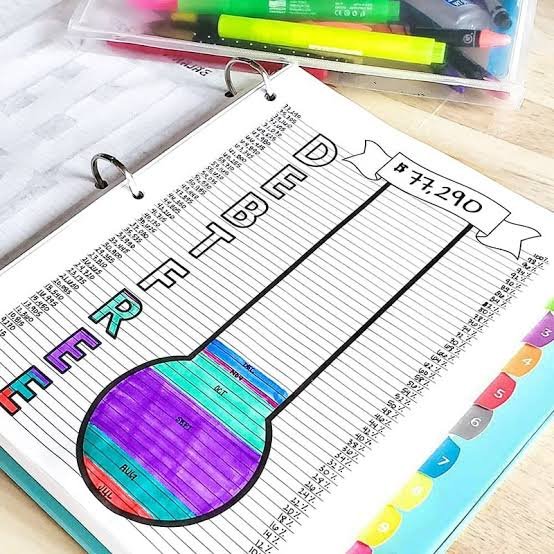
- Second, it gives you visible progress. That could be a shrinking balance, one fewer account, or a monthly chart that shows your total debt dropping over time.
- Third, it leaves room for real life. There is a difference between discipline and brittleness. Discipline helps you continue. Brittleness makes you snap.
- Fourth, it matches your personality. Some people love optimization. Some need quick wins. Some do best with automation. Some stay engaged when they review numbers weekly. The plan has to fit the person, not just the calculator.
Finally, it helps you avoid making the situation worse. That means staying aware of fees, due dates, interest, and loan terms. It also means understanding the true payoff amount on any debt, since the total required to fully satisfy a loan can differ from the current listed balance.
Progress Counts More Than Image
There is a lot of pressure to look financially disciplined in a polished, dramatic way. People like the idea of a total reset, a no fun budget, a heroic sprint to the finish. But most successful payoff stories are much less glamorous. They are repetitive. They are practical. They involve boring decisions made over and over again.
That is not a flaw. That is the point.
The best payoff plan is the one that works on your ordinary days, not just your most motivated ones. It respects the math, but it also respects the fact that you are a person with habits, stress, limits, and responsibilities. If your plan helps you keep going, it is doing its job.
In the end, debt payoff is not just about choosing the theoretically best route. It is about choosing a route you can still be on a month from now. And if you stay on the road long enough, even a less flashy plan can take you somewhere much better.